
30+
Years Of Experience
Garden Entries That Frame Outdoor Pathways
Arbor Design and Installation in San Antonio for properties that need decorative transitions between yard zones and garden spaces
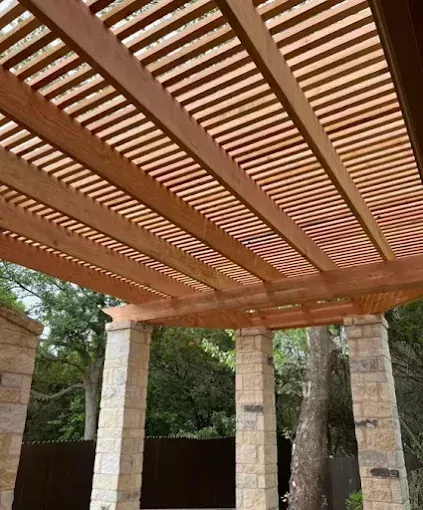
Arbors mark entry points into gardens, along walkways, or at the beginning of seating areas by creating a vertical structure that defines transition zones in your yard. Decksteriors custom-builds arbors sized to match the width of your pathway and the height needed to accommodate climbing plants or simply to provide visual scale. The arbor design considers the style of your home's exterior trim, the materials used in fencing or decking nearby, and whether the structure will support live plant weight over time.
Arbor construction involves setting posts deep enough to resist lateral movement from wind or plant load, assembling cross beams and decorative lattice panels, and finishing joints with weather-resistant fasteners. Posts are plumb-checked during installation, and horizontal members are leveled to maintain symmetry. For arbors intended to support vines or flowering plants, cross members are spaced and reinforced to handle added weight as growth matures without sagging or twisting.
Discuss custom arbor ideas and backyard enhancements during a consultation focused on your landscaping layout.
What You Notice Once an Arbor Is Installed
Installation begins with site preparation that ensures the arbor sits level even if the surrounding ground slopes, and post holes are dug to depth specifications that prevent frost heave or shifting during seasonal soil movement. Posts are set in concrete and allowed to cure fully before beams and cross supports are attached. Decksteriors maintains oversight during each phase to verify that fasteners are tightened properly and that decorative elements align with structural members.
Once the arbor is in place, you see a clearly defined entrance that draws attention to specific areas of the yard and creates a sense of separation between functional zones. The structure remains stable during wind events and does not lean or shift as soil settles around the posts. When climbing plants are added, the arbor supports new growth without requiring additional reinforcement, and the wood or composite material weathers predictably without splitting or losing structural shape.
Arbor projects include post installation, beam and lattice assembly, and finish work, but do not include plant selection, soil amendment, or irrigation setup unless coordinated separately. The width and height of the arbor affect material quantities and whether additional bracing is required for stability in open yard locations exposed to wind.
Questions Before Starting Your Project
Homeowners planning arbor installations often want clarity on material choices, sizing, and how the structure integrates with existing landscaping.
What size arbor works best for a garden path?
Arbor width should exceed the path width by at least 12 inches on each side to provide visual clearance and accommodate plant growth, and height should allow at least seven feet of vertical clearance for comfortable passage without ducking or brushing against overhead beams.
How do you choose materials for an arbor in Central Texas?
Cedar offers natural resistance to rot and insects while aging to a silver-gray patina, and pressure-treated lumber provides a cost-effective option that can be stained or painted to match other outdoor structures, while vinyl and composite materials eliminate the need for periodic sealing but offer fewer customization options for decorative details.
When should an arbor be installed relative to other landscaping work?
Arbors are typically installed after hardscape work like pathways and patios are complete but before planting beds are fully established, which allows equipment access without damaging new plants and gives you flexibility to adjust placement based on actual traffic patterns.
What kind of maintenance does an arbor require?
Wood arbors benefit from annual inspection of fasteners and application of sealant every two to three years to prevent moisture absorption, while composite and vinyl arbors require occasional cleaning but do not need refinishing or structural treatment.
How do you secure an arbor on uneven ground?
Posts are cut to different lengths to compensate for grade changes, and the top beams are installed level across the slope, which keeps the arbor visually balanced even when the ground beneath varies by several inches from one side to the other.
Decksteriors works with property owners throughout San Antonio and the Hill Country to build arbors suited to local weather and landscaping styles. Arrange a consultation to review custom arbor options and discuss how the structure fits your outdoor design.